https://www.imosver.com/en/libros/un-eslabon-perdido-de-la-lexicografia-espanola-00104962670010496267Un eslabón perdido de la lexicografía española13.3Quienes el verano de 1713 se reunieron en torno a don Juan Manuel Fernández Pacheco, marqués de Villena, y se constituyeron en Academia, lo hicieron con el firme propósito de componer «un Diccionario https://static.imosver.com/imagenes_small/9788498/978849895633.jpgLibrosLibros/POESIASin stockVISOR EDITORIAL000https://static.imosver.com/imagenes_small/9788498/978849895633.jpgLMA00101121450.72022/01/019788498956337Prieto García-Seco, DavidLibrosaño_2022idioma_SpanishCformato_Tapa blanda o Bolsilloautor_Prieto García-Seco, Davidsaga_Visor Lingüística
Artículo
Un eslabón perdido de la
Prieto García-Seco David
VISOR EDITORIAL
POESIA
Cookie notice
We use cookies to ensure you get the best experience on our site
Read cookie policy.
Manage cookie preferences
This type of cookie allows the user to browse a website, platform, or application and to use the different options or services that exist on it.
imosver_session
Description
Essential first-party cookie. It keeps your session identified while you browse: your basket, your language and access to your account. The website cannot work without it.
Duration
120 minutes
Facilities
Domain
imosver.com
OCT8NE
Description
This cookie is used for the proper functioning of the Oct8ne Chat to provide customer support service to the user.
These are those that enable the tracking and analysis of user behavior on our website. The information collected is used to measure user activity on the website and to create user browsing profiles.
_clsk
Description
Microsoft Clarity first-party cookie. It groups the pages you visit into a single session in order to analyse your journey through the website.
Duration
1 days
Facilities
Domain
imosver.com
logglytrackingsession
Description
Identifies and records the user session for analytical purposes.
Duration
Session
Facilities
Domain
.imosver.com
GOOGLE_ANALYTICS
Description
Records a unique identifier that is used to generate statistical data about how the visitor uses the website.
Duration
1 Year
Facilities
Domain
.imosver.com
_clck
Description
Microsoft Clarity first-party cookie. It stores an anonymous browser identifier so that visits to this website can be attributed to the same user and usage statistics can be produced.
Duration
1 Year
Facilities
Domain
imosver.com
CLID
Description
Microsoft Clarity third-party cookie. It identifies the first time Clarity detects this browser on any website using the service.
Duration
1 Year
Facilities
Domain
clarity.ms
_ga
Description
Google Analytics cookie. It stores an anonymous browser identifier in order to distinguish users and produce website usage statistics.
Duration
2 Year
Facilities
Domain
.imosver.com
_ga_LZR660YW0M
Description
Google Analytics 4 cookie. It keeps the analytics session state so that visits and the journey through the website can be measured.
Duration
2 Year
Facilities
Domain
.imosver.com
These are the ones that allow us to adapt the navigation on our website to your preferences (e.g., language, browser used, etc.).
_fbp
Description
Used by Facebook to offer a series of advertising products, such as real-time bids from third-party advertisers.
Duration
3 Month
Facilities
Domain
.imosver.com
afiliado
Description
First-party affiliate programme cookie. It stores for 30 days the code of the affiliate that brought you to the website, so that the sale can be attributed to them.
Duration
1 Month
Facilities
Domain
imosver.com
MUID
Description
Microsoft third-party cookie. It identifies unique browsers visiting Microsoft sites and is used for advertising, analytics and other operational purposes.
Duration
1 Year
Facilities
Domain
clarity.ms
ANONCHK
Description
Microsoft third-party cookie. It indicates whether the MUID identifier is transferred to ANID, a cookie used for advertising purposes.
Duration
10 minutes
Facilities
Domain
clarity.ms
MR
Description
Microsoft third-party cookie. It indicates whether the MUID identifier must be refreshed.
Duration
7 days
Facilities
Domain
clarity.ms
SM
Description
Microsoft third-party cookie. It synchronises the MUID identifier across Microsoft domains.
Duration
Session
Facilities
Domain
clarity.ms
_fbc
Description
Meta cookie. It stores the identifier of the Facebook or Instagram advert you arrived from, in order to attribute the visit to that advertising campaign.
Duration
3 Month
Facilities
Domain
.imosver.com
_gcl_au
Description
Google Ads cookie. It records a visit coming from an advert so that advertising campaign conversions can be measured.
Duration
3 Month
Facilities
Domain
.imosver.com
_uetsid
Description
Microsoft Advertising cookie. It identifies your browsing session in order to measure conversions from Bing advertising campaigns.
Duration
1 days
Facilities
Domain
.imosver.com
_uetvid
Description
Microsoft Advertising cookie. It identifies your browser across visits in order to measure conversions from Bing advertising campaigns.
Synopsis Un eslabón perdido de la lexicografía española
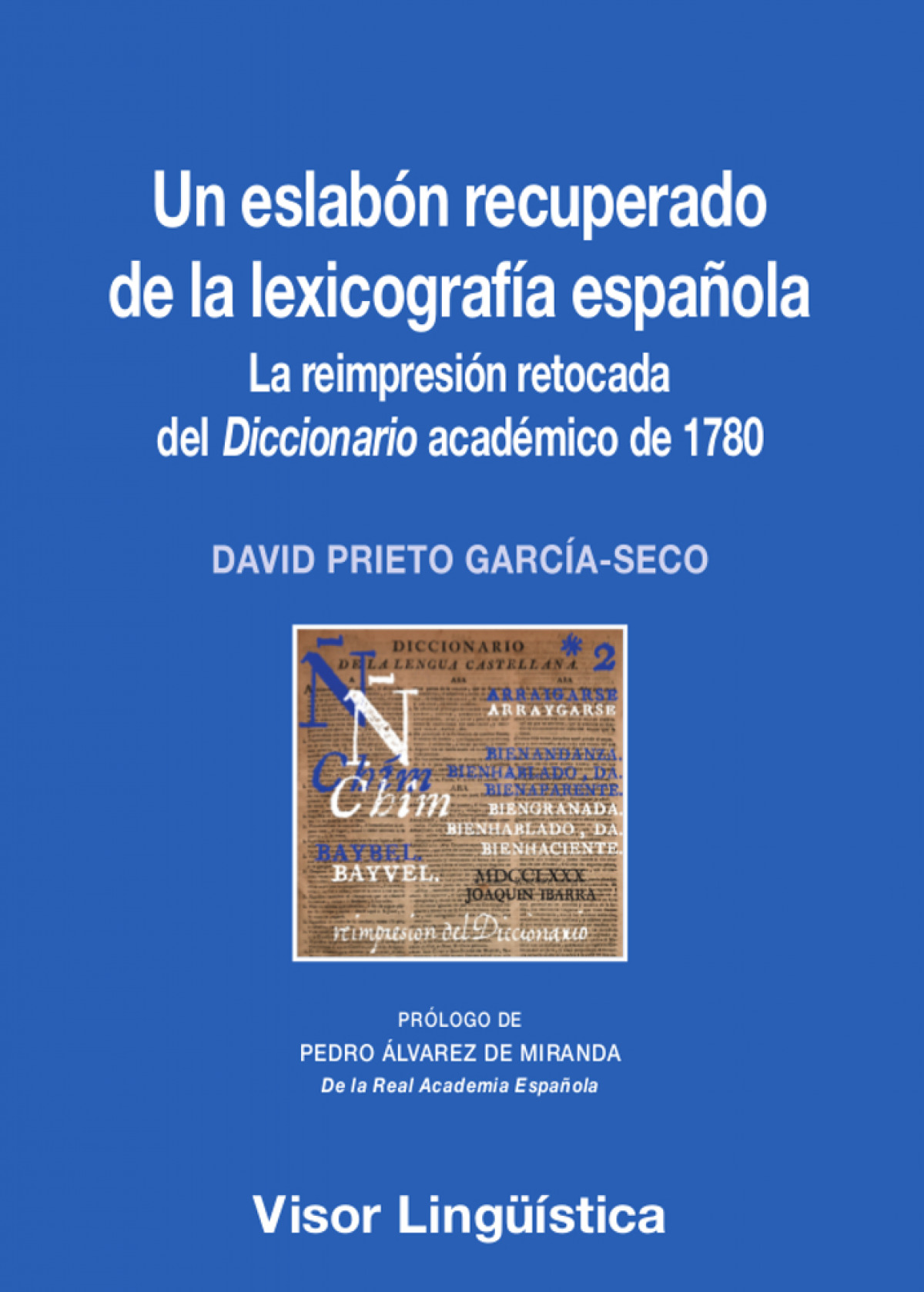
Quienes el verano de 1713 se reunieron en torno a don Juan Manuel Fernández Pacheco, marqués de Villena, y se constituyeron en Academia, lo hicieron con el firme propósito de componer «un Diccionario de la lengua, el más copioso que pudiere hacerse». Su primer tomo vio la luz en 1726 y, al cabo de trece años, se culminó, con el sexto, el que más adelante se conocería como Diccionario de autoridades, una obra de una extraordinaria calidad científica que puso la lexicografía española a la cabeza de los primeros grandes diccionarios modernos de la Europa del siglo XVIII. Pese a que la Academia abrazó la idea de hacer una segunda edición de Autoridades ùy llegó a publicar un primer tomo (1770)ù, en 1777 surgió un nuevo proyecto lexicográfico: elaborar un «compendio», un diccionario más manejable y barato, en un solo tomo, que satisficiera la demanda del público. En 1780 se publicó el Diccionario de la lengua castellana reducido a un tomo para su más fácil uso, una obra que con el paso del tiempo se convertiría por antonomasia en «el diccionario de la Academia». El estudio que el lector tiene en sus manos se ocupa de esa primera edición del diccionario común, que hoy en su serie histórica alcanza la vigesimotercera (2014). Hasta la fecha, quienes han precisado consultar aquella primera edición en un solo volumen han acudido fundamentalmente al Nuevo Tesoro Lexicográfico de la Lengua Española (2001). Sucede, sin embargo, que tal obra no tuvo una, sino dos «impresiones», y la segunda de ellas, desconocida hasta ahora, introdujo diversos retoques respecto de la primera. Este libro se dedica a desentrañar en qué circunstancias se elaboró la reimpresión retocada del Diccionario académico de 1780 y examina detenidamente los distintos cambios que se produjeron entre las dos impresiones. Se recupera así un eslabón lexicográfico de los inicios mismos del diccionario común: una impresión que contiene numerosas modificaciones que más tarde pasarían a la segunda edición (1783) del repertorio académico.